If you own rental property in Bellevue, Seattle, Everett, or anywhere in the greater Puget Sound, 2025 has likely felt overwhelming. Rent control expansions, extended notice timelines, and stricter service requirements have made even routine lease renewals far more complex.
The reality? A simple rent increase is no longer simple.
Washington landlords must now manage separate legal timelines, city-specific caps, certified mailing requirements, and meticulous documentation standards. Missing a step can invalidate your notice — or worse, expose you to penalties or relocation assistance liability.
This guide breaks down what’s changed, what matters most, and how a standardized process protects your investment.
Key Takeaways
-
Rent Increase Notices and Lease Renewal Notices are separate processes with different timelines.
-
Rent increase caps and notice requirements vary by city; Seattle, Tacoma, Olympia, and others each have unique rules.
-
All notices must be delivered in person and sent via Certified Mail with proof of service and photo documentation.
-
Lease Renewal Fees reflect the extensive labor and compliance required to prepare, serve, mail, and track each notice.
- Certified Mail pass thru expense is direct result of regulation change.
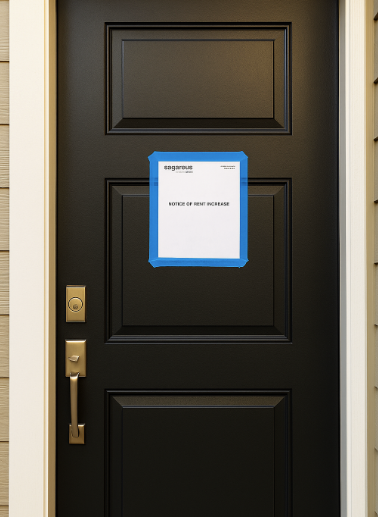
Rent Increase Notices and Lease Renewal Notices Are Separate
One of the most common compliance mistakes we see in Seattle-area property management is treating rent increases and lease renewals as one combined action.
They are not.
Each follows its own legal timeline under Washington law. Missing either window can reset the clock and delay your ability to adjust rent.
Under current Washington requirements, renewal offers must be served no earlier than 90 days and no later than 60 days before lease expiration. Rent increase timelines vary by jurisdiction and can be significantly longer.
Different Cities = Different Regulations
There is no single statewide standard that works everywhere.
In markets like Bellevue, Redmond, Kirkland, Renton, Shoreline, Lynnwood, Bothell, and much of unincorporated King or Snohomish County, rent increase caps generally follow the statewide structure.
However, cities such as Seattle, Tacoma, and Olympia have additional rules that materially change your compliance obligations.
Rent Increase Caps (2025)
- Tacoma & Olympia: Increases over 5% may trigger tenant relocation assistance liability up to three times the monthly rent if the tenant vacates.
- Most other Washington jurisdictions: Increases are capped at the lesser of 7% + CPI or 10%.
These caps are influenced by legislative changes including HB 1217 and HB 1003, as well as provisions under RCW 59.18.140.
For investors in multi-city portfolios, applying the wrong standard can create serious exposure.
Rent Increase Notice Timelines (City-Specific)
The required advance notice depends on location:
- Seattle: 180 days’ advance notice.
- Tacoma: Three separate notices at 180, 120, and 90 days.
- Most other Washington jurisdictions: Minimum 90 days; some require 120 days for increases exceeding 5%.
These timelines apply even if the lease is ending. The rent increase clock does not automatically align with lease expiration.
Lease Renewal Notice Timeline (Statewide Rule)
Washington law requires renewal offers to be delivered:
- No earlier than 90 days before lease expiration
- No later than 60 days before lease expiration
This timeline is separate from any rent increase notice. Landlords in Bellevue or Seattle who assume a 180-day rent increase notice satisfies renewal requirements may unintentionally violate renewal statutes.
Proper Service Requirements: Documentation Is Everything
Serving notice in Washington is no longer as simple as mailing a letter. Best practice and increasingly standard among professional property managers includes:
- Preparing notices for each adult occupant plus one addressed to “All Other Occupants”
- Personal delivery (when possible)
- Certified mailing with proof of service
- Completion of a Declaration of Service
- Photo documentation with timestamp
- Retaining mailing receipts
- Logging follow-up communication
Organizations like the Rental Housing Association of Washington emphasize detailed proof of service procedures because documentation is what protects landlords in court.
If challenged, your records must show compliance step-by-step.
Why Many Property Managers Standardize the Process
With differing city rules, multiple notice deadlines, and service documentation requirements, standardized procedures reduce liability.
A structured system typically includes:
- Pre-scheduled compliance tracking
- Standardized rent increase models (within legal limits)
- Documented service protocol
- Certified mail tracking
- Renewal addendum preparation
- Tenant communication logs
Standardization reduces the risk of discrimination claims, retaliation allegations, or procedural errors.
Why Lease Renewal Fees Have Increased
Landlords often ask why lease renewal administration costs have risen in 2025.
A typical renewal now involves:
- Multiple notices per adult occupant
- In-person property visits
- Certified mailing orders
- Declaration of Service preparation
- Photographic documentation
- Negotiation communication
- Addendum drafting
- Signature follow-up
In Tacoma, where three rent increase notices are required, the labor multiplies significantly.
Additionally, certified mail expenses (often around $15–$20 per mailing) are a direct result of regulatory change, not discretionary service upgrades.
Compliance Is a Risk-Management Function
Lease renewals and rent increases used to be administrative tasks. Today, they are compliance events.
Failure to:
- Deliver notices on time
- Follow correct service method
- Apply the correct cap
- Provide required documentation
…can invalidate your increase or expose you to relocation penalties.
For out-of-state investors and accidental landlords in the Puget Sound region, this is where professional oversight becomes especially valuable.
Comparison: Self-Managing vs Professional Property Management
| Factor |
Self-Management |
Professional Property Management |
| Tracking city-specific caps |
Owner responsibility |
Monitored by compliance systems |
| Monitoring 60–180 day timelines |
Manual calendar tracking |
Automated tracking |
| Preparing multi-party notices |
Owner prepares |
Standardized templates used |
| Certified mail coordination |
Owner arranges |
Managed and documented |
| Proof of service documentation |
Owner retains records |
Digitally logged + archived |
| Relocation assistance risk mitigation |
Owner assumes risk |
Procedures designed to reduce exposure |
For investors with multiple properties across Bellevue, Seattle, and surrounding cities, process consistency matters.
WA Lease Renewals & Rent Increases (2025)
Frequently Asked Questions
1. Are rent increase notices and lease renewal notices the same thing in Washington?
No. They are separate legal processes with different timelines. A rent increase notice does not replace the required lease renewal offer window of 90–60 days before lease expiration.
2. How much notice is required for a rent increase in Seattle?
Seattle requires 180 days’ advance written notice.
3. What happens if I raise rent more than 5% in Tacoma?
In Tacoma, increases above 5% may trigger tenant relocation assistance liability up to three times the monthly rent if the tenant vacates.
4. What is the rent increase cap in most Washington cities outside Seattle and Tacoma?
Most jurisdictions follow the statewide cap of the lesser of 7% + CPI or 10%, subject to legislative adjustments.
5. When must a lease renewal offer be delivered in Washington State?
Between 90 and 60 days before the lease expiration date.
6. Do I need to send notices by certified mail in Washington?
Yes. WA State requires all landlord-tenant notices to be sent by certified mail.
7. What documentation should landlords keep?
Copies of notices, Declarations of Service, mailing receipts, timestamped photographs, and communication logs.
8. Do different rules apply in Bellevue compared to Seattle?
Yes. Seattle has its own 180-day notice requirement, while Bellevue generally follows statewide standards unless superseded by local ordinance.
Final Thoughts for Washington Landlords
Washington’s 2025 regulatory landscape demands precision.
For landlords in Bellevue, Seattle, Everett, Federal Way, Mercer Island, and surrounding Puget Sound markets, lease renewals and rent increases now require:
- Calendar accuracy
- Legal awareness
- Documentation discipline
- City-by-city knowledge
When handled correctly, your rental property remains compliant, profitable, and protected. When handled casually, even small oversights can create expensive consequences.
If you’d like guidance reviewing your current lease renewal timeline or upcoming rent adjustments, consult with a knowledgeable local property management professional familiar with Washington’s evolving landlord-tenant regulations.